The Best St. Petersburg Florida Emergency Roof Leak Repair
Is Your Roof Leaking After St. Petersburg’s Heavy Rains? Here Is What Every Homeowner Needs to Know
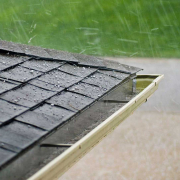
This summer has been a particularly punishing one for roofs across St. Petersburg and South Pinellas County. St. Petersburg’s wettest months run from June through September, and July alone has seen more than five inches of rainfall with 25 to 26 rainy days during peak summer months. Some west St. Pete neighborhoods have seen more than four inches of rain fall in under 60 minutes during isolated storm events this season. Heavy rain can overwhelm drainage systems and test the integrity of any roof prompting searches for an emergency roof leak repair near me.
If you are in need of an emergency roof leak repair, you are in the right place. At Drew Roofing, we handle emergency roof maintenance for homeowners throughout St. Petersburg and South Pinellas County. We understand the urgency, the stress, and the uncertainty that comes with water getting into your home.
Why This Summer Is Producing So Many Roof Leaks In St. Petersburg
Roof leaks rarely announce themselves during dry weather. They wait until there is a small gap in flashing, a handful of cracked or lifted shingles or when there is a sealant joint that dried out during last summer’s heat. These failures may not be immediately visible until significant water volume arrives. Then pushes its way through the path of least resistance. This summer’s sustained heavy rainfall is doing exactly that to roofs across the city that have accumulated damage from multiple storms, years of UV exposure and corrosion.
If you currently have an active roof leak with water entering your home, do not wait. Move valuables, electronics, and furniture away from the affected area. Place buckets or towels to capture dripping water and protect your flooring. Turn off electrical circuits in any room where water is making contact with light fixtures or outlets. Then call Drew Roofing. Water that sits inside a wall or ceiling cavity begins growing mold within 24 to 48 hours in Florida’s heat and humidity.
What Are The Signs Of A Roof Leak In A St. Petersburg Home
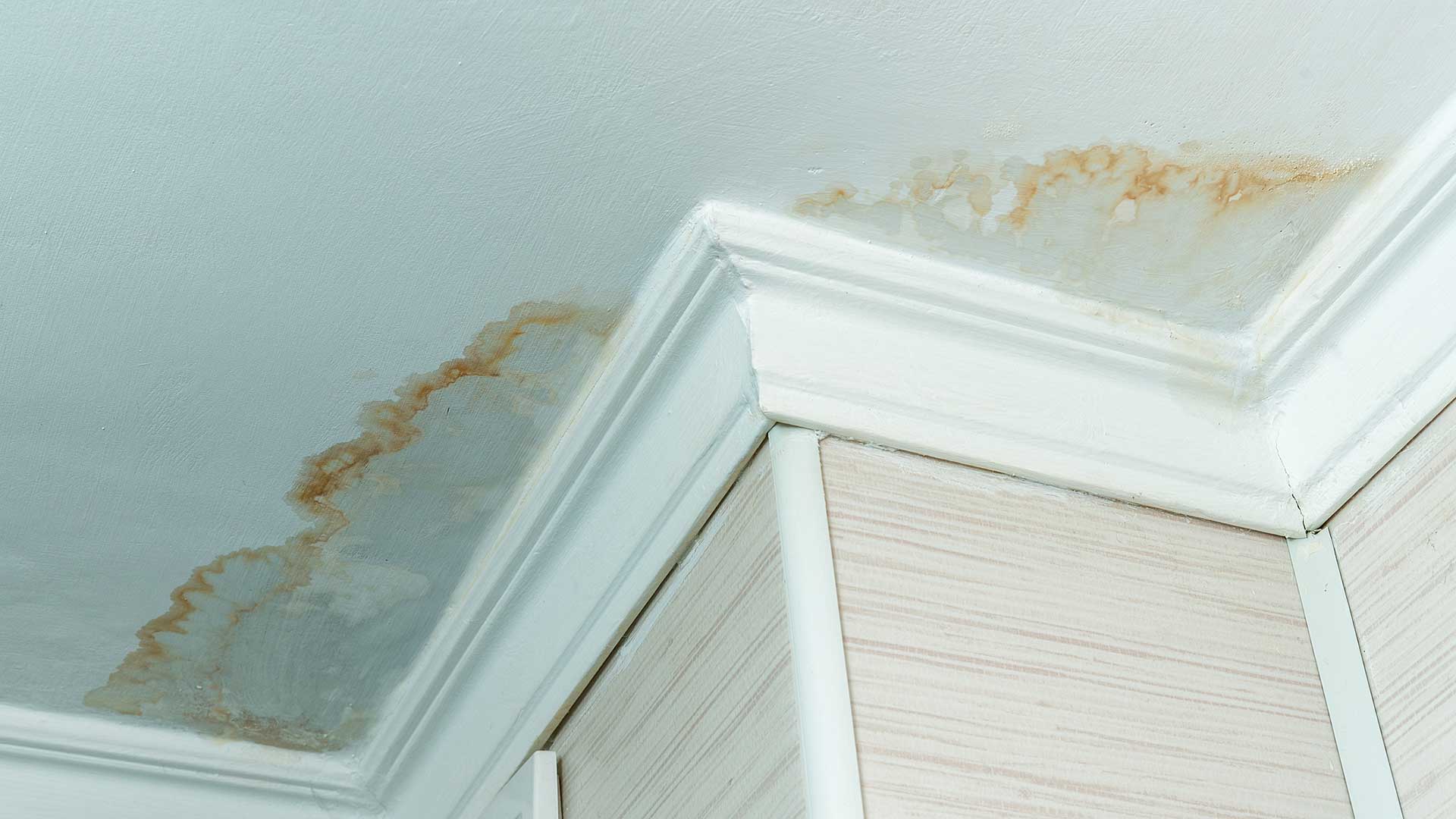
Some roof leaks announce themselves dramatically. For example, you might experience a steady drip from the ceiling during a storm. Other signs might include a water stain that appears overnight or a ceiling that begins to bow from accumulated moisture. More subtle signs can develop slowly inside wall cavities, attic spaces, and roof decking over weeks or months before any interior sign appears. Knowing what to look for is the first step in catching a leak before it becomes a structural problem.
Interior Warning Signs
- Water stains on ceilings, particularly brown or yellowish rings that expand after rainfall events
- Paint bubbling, peeling, or blistering on ceiling surfaces or the upper portions of walls
- Damp or musty odor in attic spaces, closets, or top-floor rooms that intensifies after rain
- Visible dripping or active water entry during or immediately after a storm
- Soft spots, sagging, or discoloration in ceiling drywall
- Mold or mildew growth on walls or ceilings, particularly in corners near exterior walls
- Daylight visible in attic spaces when viewed from below
- Insulation in the attic that is wet, compressed, or stained from above
What To Look For Outside The House
- Missing, cracked, curling, or visibly deteriorated shingles anywhere on the roof surface
- Lifted, separated, rusted, or missing flashing around chimneys, vents, skylights, or wall transitions
- Granule accumulation in gutters or at downspout bases
- Gutters that are pulling away from the fascia, which can allow water to back up under the roof edge
- Visible moss, algae, or lichen growth on shingle surfaces, which indicates moisture retention
- Sagging anywhere along the roof line, which points to compromised decking or structural framing
- Damaged or missing ridge cap shingles at the peak of the roof
- Caulking around penetrations that is cracked, shrunken, or pulling away from the surface
Keep in mind that the location of the leak and the location of the actual roof failure are often not directly above each other. Water enters the roof assembly at the breach point, then travels along the roof deck, rafters, or ceiling framing before finding a low point where it drips into the living space. This is why a ceiling stain in a bedroom may trace back to a flashing failure at a chimney or wall junction twenty feet away. Accurately locating the true source of a leak requires an experienced roofer who knows where to look.
Call Drew Roofing for fast, reliable emergency roof leak repair.
The Drew Roofing Emergency Response Process
When a St. Petersburg homeowner contacts Drew Roofing about an emergency roof leak, we move through a clear, structured process designed to stop the damage as quickly as possible while giving the homeowner an honest picture of what is going on and what their options are.
Emergency Response And Temporary Protection
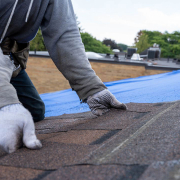
Full Roof Inspection And Leak Source Identification
Assessment For A Repair Versus Replacement
Written Scope And Transparent Pricing
Permitted, Code-compliant Repair Or Replacement
Post-repair Inspection And Documentation
When Is A Roof Too Old To Repair?
This is a conversation Drew Roofing has with St. Petersburg homeowners regularly, and it is one we approach with honesty even when the answer is not what a homeowner wants to hear. In Florida’s climate the summer heat can drive surface temperatures above 150 degrees Fahrenheit. Additionally, the salt air along coastal Pinellas County and the stress of an annual storm season can cause roofing materials to wear faster than in most other parts of the country.
For asphalt shingle roofs, the realistic useful life in St. Petersburg is 15 to 20 years under typical conditions. A 20-year-old shingle roof that is actively leaking has almost certainly reached the end of its serviceable life. Repairing a specific section addresses the symptom. However, the underlying material across the rest of the roof is probably in the same state of advanced deterioration. Within one to two rainy seasons, new failure points will emerge, new repairs will be needed, and the cumulative cost of those repairs will approach or exceed the cost of a replacement that could have been done once, correctly, with a fresh warranty.
The clearest indicators that a roof has passed the point where repair makes economic or practical sense include widespread shingle granule loss across the entire roof surface. shingles that are brittle, cracked, and curling at the edges throughout the field of the roof rather than in isolated areas, visible daylight through the roof deck in multiple locations, and a repair history that shows the same sections failing repeatedly. When we find these conditions, we tell the homeowner directly and explain exactly why continued repair is not in their long-term interest.
If You Have A Roof Leak, Call Drew Roofing For An Inspection Today
If you are dealing with an active leak or you noticed ceiling stains, moisture odors, or damaged shingles after this summer’s storms, the right time to call is before the next rain event arrives. Contact Drew Roofing today for a fast, professional roof inspection. We will identify the true source of the problem, give you an honest assessment of your repair or replacement options, and get your home protected with permitted, code-compliant work you can rely on. Call us at (727) 522-3739 or contact us on our website now to schedule your inspection.