
Is Drew Roofing a Licensed Roofing Contractor?
What St. Petersburg Homeowners Should Know Before Hiring Anyone
Yes. Drew Roofing is a fully licensed roofing contractor serving St. Petersburg and South Pinellas County. We hold an active Florida state roofing license issued by the Florida Department of Business and Professional Regulation (DBPR), carry general liability insurance, and maintain workers’ compensation coverage for every member of our crew. We are happy to provide our license number and current insurance certificates to any homeowner who asks. We even encourage you to verify them before signing a contract with us or with anyone else.
What Florida Requires to Call Yourself a Licensed Roofing Contractor
Florida does not allow anyone to perform roofing work for compensation without holding a valid state license. Under Florida Statutes Chapter 489, the DBPR Construction Industry Licensing Board (CILB) issues two types of roofing credentials: the Certified Roofing Contractor (license prefix CCC), which is valid statewide, and the Registered Roofing Contractor (license prefix RC), which is valid only within the specific local jurisdiction that issued it.
Earning either credential is not a formality. Applicants must pass a trade examination and a business and finance examination, document a minimum of four years of relevant experience and provide proof of insurance, bonding, and a $20,000 contractor license surety bond. The license must be renewed every two years and requires continuing education. A general contractor’s license does not cover roofing as a specialty trade. A roofing-specific credential is required.
Performing roofing work without a valid Florida license is a first-degree misdemeanor on the first offense. Despite that, unlicensed roofing activity remains a persistent problem in Florida, particularly in the aftermath of hurricanes and severe weather events when demand spikes and out-of-state crews follow the storm.
How to Verify Any Roofing Contractor’s License in Florida
You do not have to take a contractor’s word for it. The DBPR maintains a free, publicly searchable license database that takes less than five minutes to use.
How to verify a Florida roofing contractor license
- Go to MyFloridaLicense.com and navigate to “Verify a License”
- Search by the contractor’s name, business name, or license number
- Confirm the status shows “Current, Active” and does not say not expired, suspended, or revoked
- Confirm the license type says “Certified Roofing Contractor” or “Registered Roofing Contractor” Remember, a general contractor license is not sufficient for roofing work
- Confirm the name on the license matches the name on the contract you are being asked to sign
- Request a current certificate of insurance showing general liability and workers’ compensation coverage. A legitimate contractor provides this without hesitation
Any contractor who refuses to provide a license number in writing, pressures you to sign before you can verify or cannot produce a current certificate of insurance is telling you something important. The Florida Roofing and Sheet Metal Contractors Association recommends that homeowners ask for a copy of the contractor’s workers’ compensation and liability insurance certificates before any work begins.
The 1099 Problem: What “Licensed and Insured” Does Not Always Mean
Roofing companies typically don’t want you to know about how they staff their company. In fact, it is a conversation most roofing companies would prefer not to have with you.
A roofing company can hold a valid Florida license, carry a general liability policy and still send workers to your home who have no workers’ compensation coverage on them personally. How? By classifying those workers as independent contractors and paying them on a 1099 tax form rather than as W-2 employees. The roofing company’s license is real. Their liability policy is real. But the people on your roof may be operating as self-employed individuals who are individually responsible for carrying their own workers’ comp. Consequentially, many do not.
Unfortunately, this is a common staffing model in the roofing industry. It can create several specific risks for homeowners that are worth understanding before you sign a contract.
Workers’ compensation gap: Under Florida law, if an uninsured worker is injured on your property, the liability for their medical expenses and lost wages can fall back on you as the property owner. As the Florida Roofing and Sheet Metal Contractors Association notes, “as a homeowner, you could be held liable if a worker is injured and there is no workers’ compensation.” Additionally, your homeowners’ insurance policy may not cover this exposure.
Why homeowners cannot easily spot this problem
The verification gap is the part that makes this issue genuinely difficult for homeowners to navigate. A roofing company can accurately advertise that they are “licensed and insured” while paying every person on a job in cash or via 1099. The company’s license is real. Their general liability policy may be real. But the workers’ comp coverage that protects you if someone gets hurt may stop at the owner of record. It does not cover the crew members actually doing the work on your property.
You cannot verify a crew member’s individual insurance status by asking the company. You would need to request certificates of insurance that specifically name each worker or confirm that all workers are covered as W-2 employees under the company’s policy. Very few homeowners know to ask this, and very few companies volunteer the information.
Questions to ask any roofing contractor before signing
- Are the workers who will be on my roof your direct W-2 employees, or are they paid on a 1099 as independent contractors?
- Does your workers’ compensation policy cover every person who will be on my property, or only certain employees?
- Can you provide a certificate of insurance that reflects current, active coverage?
- Will all work be performed under your license and pulled as a permitted job with Pinellas County?
- Who is responsible if a worker is injured on my property and they do not carry their own insurance?
A contractor who answers these questions clearly and without hesitation is one you can evaluate on the merits. A contractor who deflects, becomes defensive, or tells you “that’s not how it works” is giving you important information.
How Drew Roofing Is Structured and Why It Matters to You
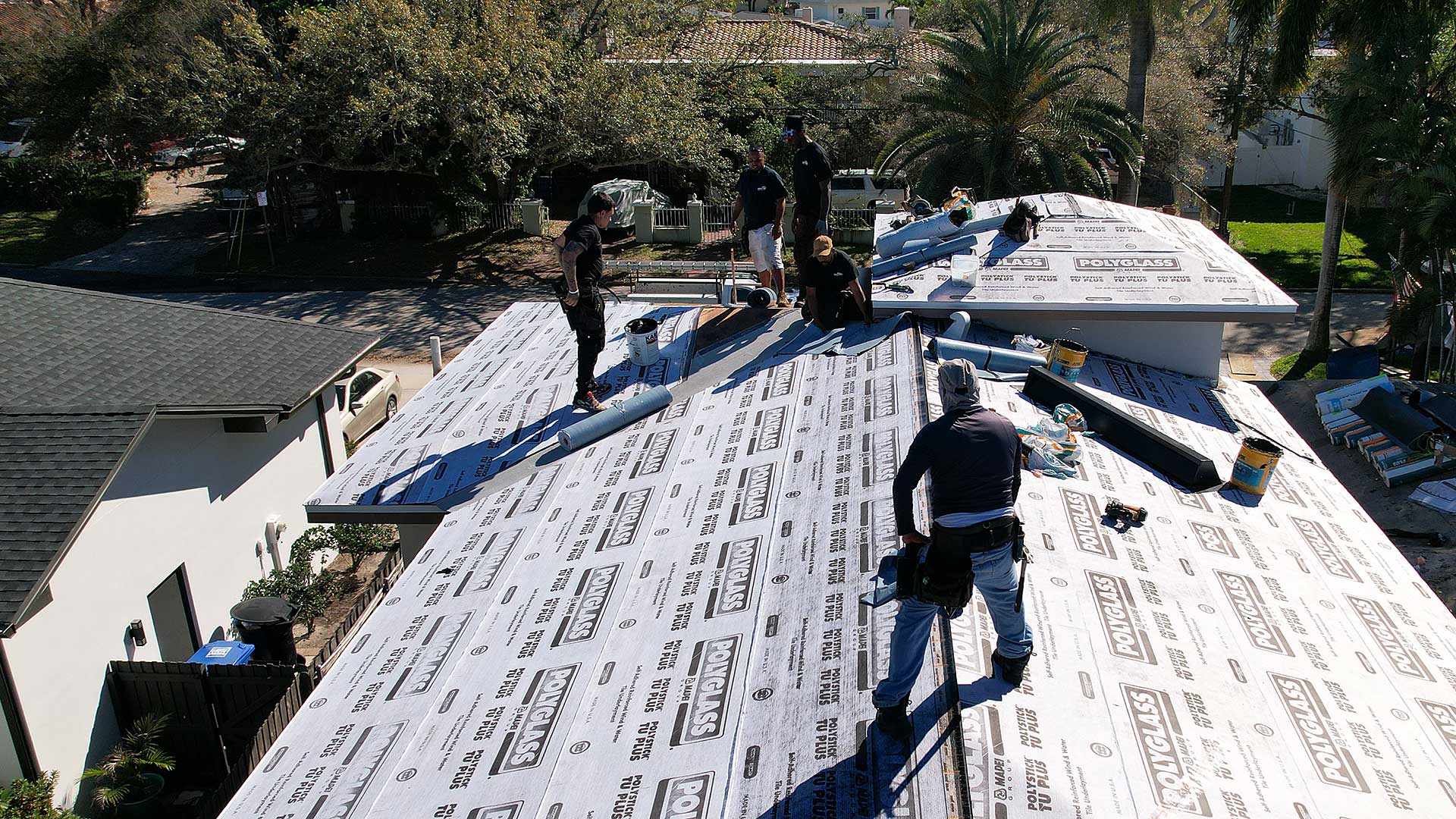
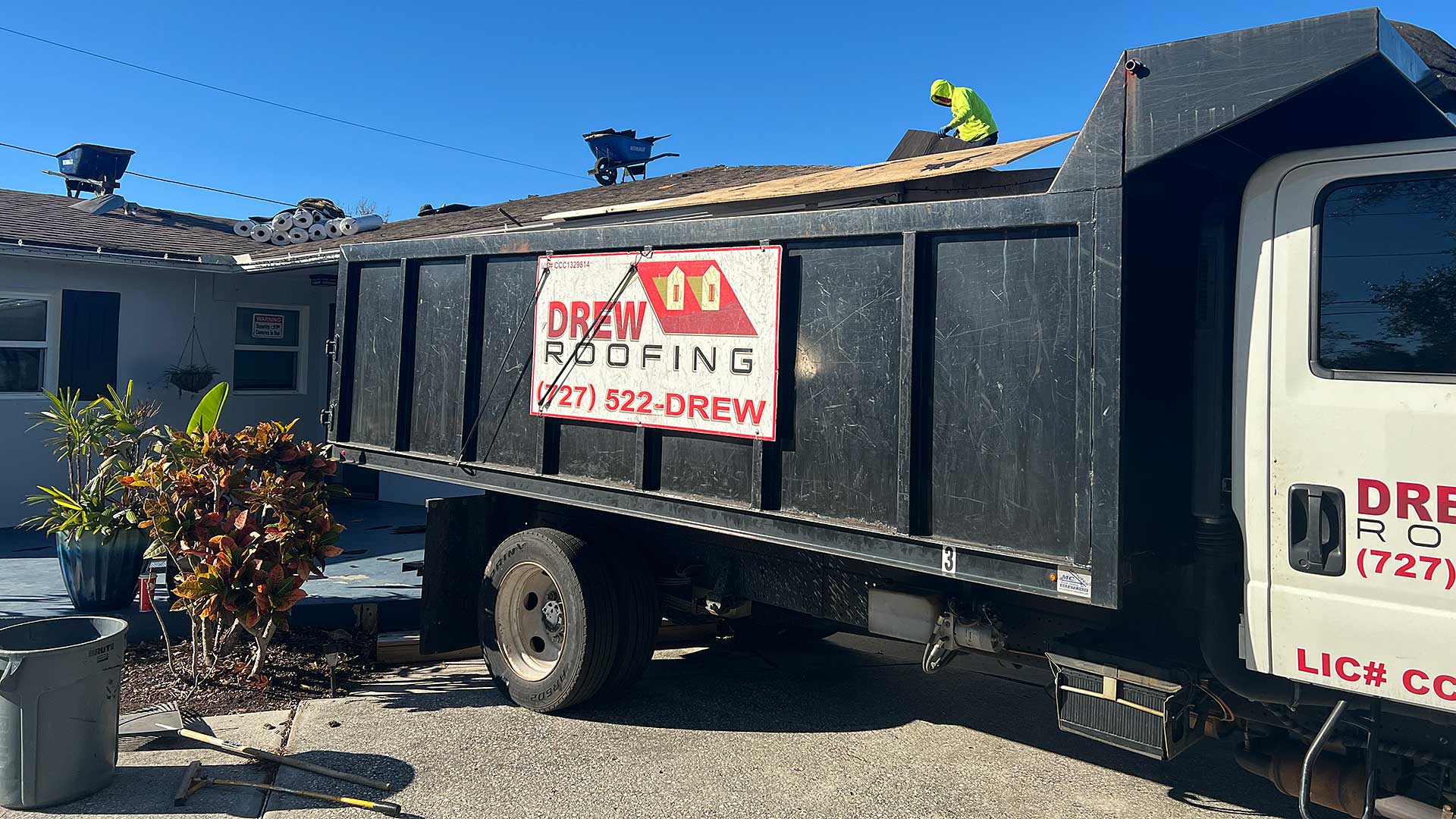
Every member of our roofing crew is a W-2 employee of Drew Roofing. As a licensed roofing contractor, we do not use subcontractors and we do not pay crew members on a 1099 basis. Every person who steps onto your property is covered under our workers’ compensation policy and our general liability insurance.
This means that if something goes wrong during your project, such as an injury on the job, accidental property damage or a dispute over workmanship, the responsibility sits with Drew Roofing and not with an independent contractor who may or may not be reachable after the job is done. Our crew is our crew. Our responsibility. Your peace of mind.
We recognize that this model costs more to operate than one built on 1099 labor. W-2 employees require payroll taxes, workers’ compensation premiums and a level of organizational commitment that is more expensive than simply dispatching independent contractors. As a result, we may not be the cheapest quote you will receive. However, we are comfortable with that because we believe the homeowners who are the right fit for Drew Roofing are the ones who understand what they are actually buying when they hire a roofing company.
What Florida’s Licensing Requirements Mean for Your Roof Specifically
Beyond the crew staffing question, there are practical reasons why a properly licensed roofing contractor matters for the specific work being done on your St. Petersburg home.
Florida has its own building codes which are required by law and out-of-state or unlicensed contractors are often not up to speed with Florida Building Code requirements. For homeowners in St. Petersburg and South Pinellas County, this is not a minor point. Florida’s wind uplift requirements, secondary water barrier standards, and product approval mandates for roofing materials are among the most demanding in the country. They exist because of the hurricane risk this region faces every year.
Work performed by an unlicensed or improperly licensed contractor that does not meet Florida Building Code can result in a failed inspection, a stop-work order, required tear-off and reinstallation of non-compliant work, and voided manufacturer warranties on the materials installed. It can also create problems during future insurance inspections and at the time of sale if a buyer’s inspector identifies the permit history.
Permit note: Never pull a permit on behalf of a contractor. A homeowner who pulls their own permit takes on legal responsibility for the work being performed under it. Legitimate licensed contractors pull their own permits. If a contractor asks you to pull the permit, that is a clear warning sign.
Why We Bring This Up Ourselves
It would be easier to simply say we’re a licensed roofing contractor and leave it at that. Most roofing companies do exactly that. We have chosen to lay this out in detail because we think homeowners in St. Petersburg deserve to understand what they are actually evaluating when they compare roofing quotes. The gap between a company that truly stands behind every person on your roof and one that does not is a gap that is very hard to see from the outside until something goes wrong.
We serve a community we live in. We are not a national franchise or an out-of-town crew following storm work. The homeowners we work with are our neighbors and our business depends on the reputation we build in St. Petersburg and South Pinellas County one roof at a time. That accountability is part of why we operate the way we do.
